https://www.foodnavigator.com/Article/2026/10/06/egg-and-milk-quality-impacted-by-climate-change/
By Augustus Bambridge-Sutton
Food Navigator Excerpt: Extreme heat not only impacts crops, but products produced by livestock as well
Climate change impacts on milk and egg quality: summary
Rising temperatures can reduce milk protein and fat content
European heatwaves caused measurable milk quality declines during 2026
Heat-stressed hens may produce thinner shells and altered yolks
Consumer demand remains largely unaffected despite temporary quality changes
Adaptation mitigates impacts, but extreme heat still poses risks
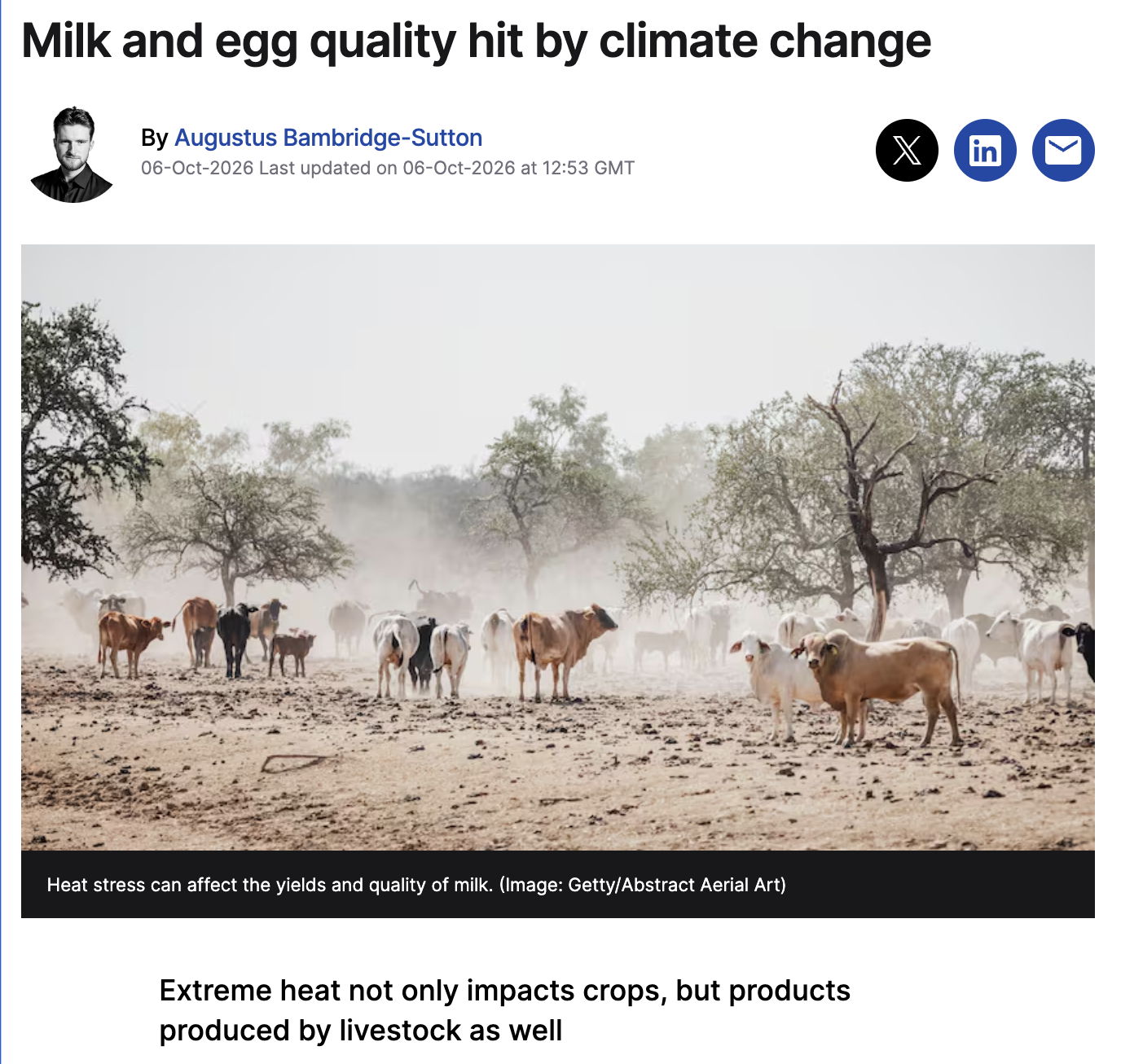
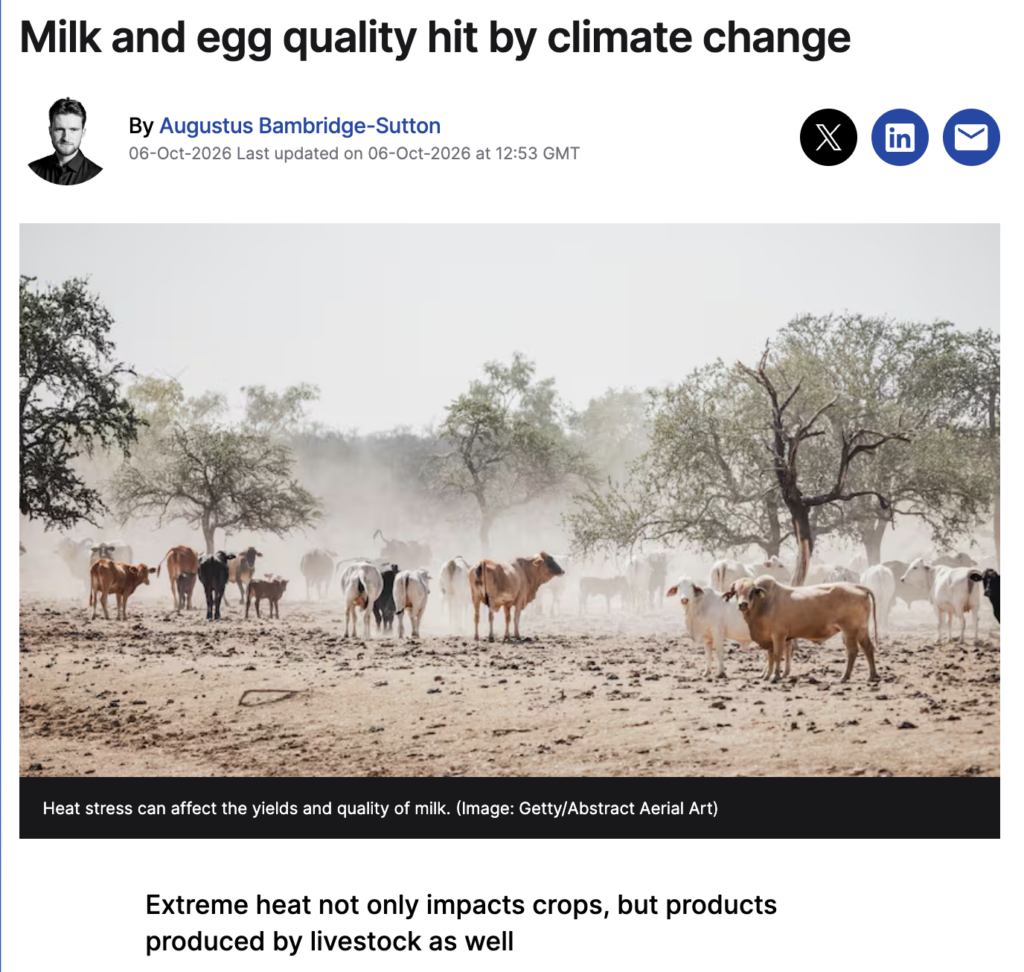
While the impact of climate change on crops gets a lot of the attention, increasing temperatures can also affect livestock.
Yields and quality of products such as milk and eggs are often affected by hot weather, and extreme heat can even cause animal deaths. As climate change increases temperatures, this risk becomes greater.
How much does this actually impact the egg and dairy industries?
Milk quality is lower
Milk from heat-stressed animals often has a lower protein and fat content, according to the UN’s Food and Agriculture Organisation (FAO) and the World Meteorological Organization (WMO).
This impact of heat on milk quality was seen during the intensive heatwaves that hit Europe earlier this year.
“In the days and weeks of the summer 2026 heatwaves, the decrease of the solid content in milk was at a detectable size,” confirms Alexander Anton, secretary general of the European Whey Processors Association and European Dairy Association.
Egg quality
Heat-stressed chickens can also produce eggs with thinner shells and altered yolk quality, according to the FAO and WMO.
The term ‘altered yolk quality’ refers to “changes in the physical characteristics of the yolk, such as its consistency, colour, size or structural integrity. Heat stress can affect the physiology of laying hens and, in turn, influence how nutrients are deposited in the egg”, explains Monika Tothova, senior economist at the FAO.
Thinner shells can create issues during transport, handling and storage, increasing the risk of breakage.
…