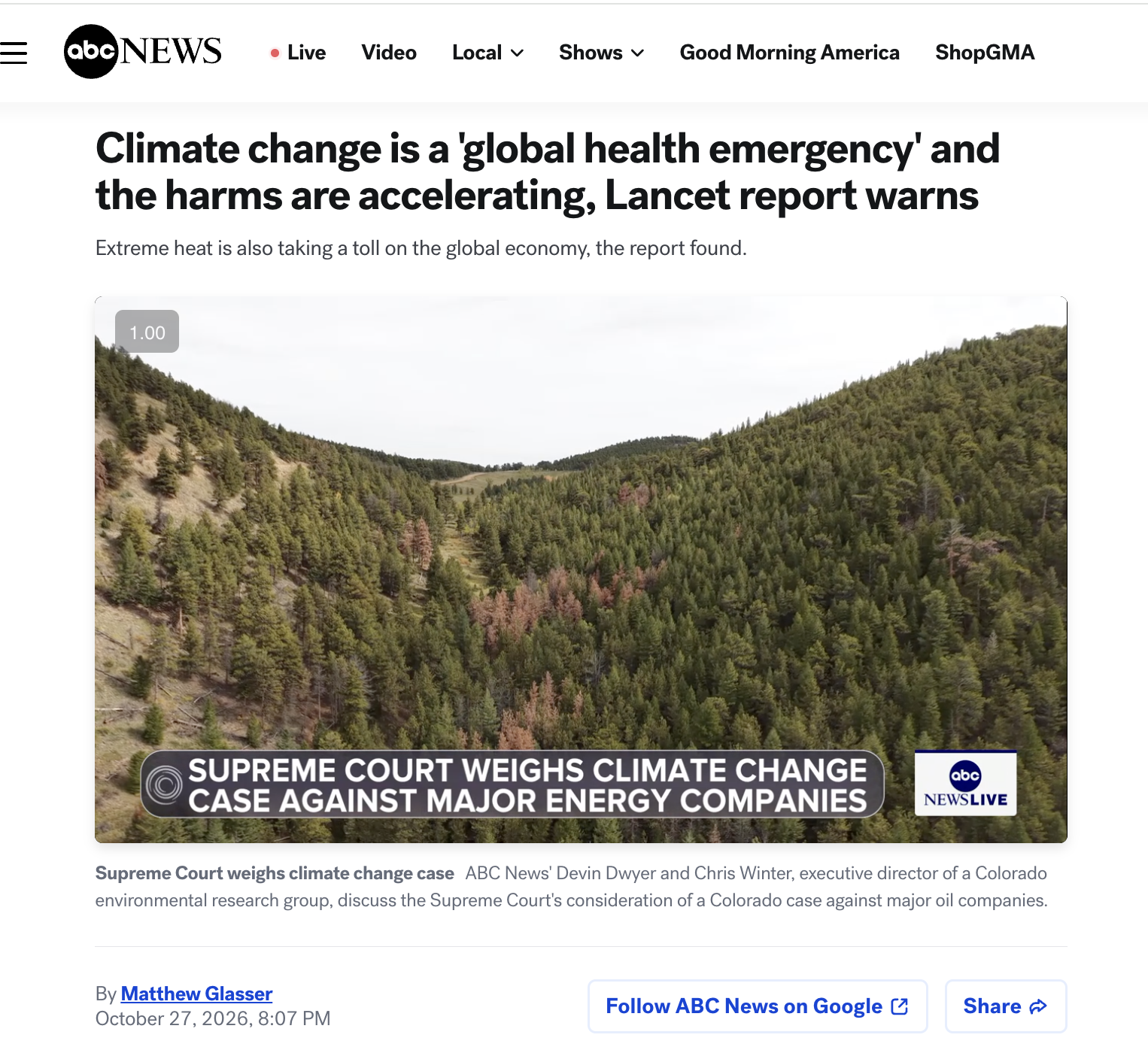
Extreme heat is also taking a toll on the global economy, the report found.
By Matthew Glasser
Excerpt: When the Paris Agreement was adopted in 2015, then-President Barack Obama said, “This agreement represents the best chance we’ve had to save the one planet that we’ve got.”
But a decade later, a new report, led by University College London in collaboration with the World Health Organization (WHO), finds that while progress has been made, many detrimental health indicators linked to climate change are moving in the wrong direction. The report’s authors are also warning that problems aren’t just increasing — they’re accelerating.
“A decade after the Paris Agreement, our findings are unambiguous: the health harms of climate change are growing faster than the world’s response to them, and in many cases even accelerating,” said Marina Romanello, a professor at University College London and the executive director of the Lancet Countdown in a statement.
The 2026 report of The Lancet Countdown on health and climate change includes findings from 146 researchers at more than 100 institutions in more than 30 countries. Researchers found evidence that heat was linked, on average, to more than 540,000 estimated deaths per year from 2016, when the Paris Agreement went into effect, through 2023, the latest year with available data. The researchers attribute 68% of those fatalities to climate change.
“These numbers point to a clear emergency,” Romanello said in a statement. “The rate of increase in many climate-related health threats is accelerating, while heat deaths linked to climate change have reached a record-high, and the economic toll is battering vulnerable sectors and communities the hardest.”
…
According to the report, heat is also taking a toll on the global economy. Because of reduced productivity, the researchers estimated that the world lost more than a trillion dollars in potential income in 2025. They say it’s the third consecutive year that losses topped the trillion-dollar mark.
…
“The threats to people’s health and people’s survival have reached unprecedented levels, with many of these threats and impacts even accelerating in the last decade with respect to the previous one,” Romanello said.
“The risks become even more profound when you consider how different hazards interact and compound. At the same time, drought is spreading, and the world is swinging to water extremes, some drying out, while others are flooding. This isn’t a gradual worsening; it’s a step change that must be recognized as the global health emergency it is,” Romanello said.
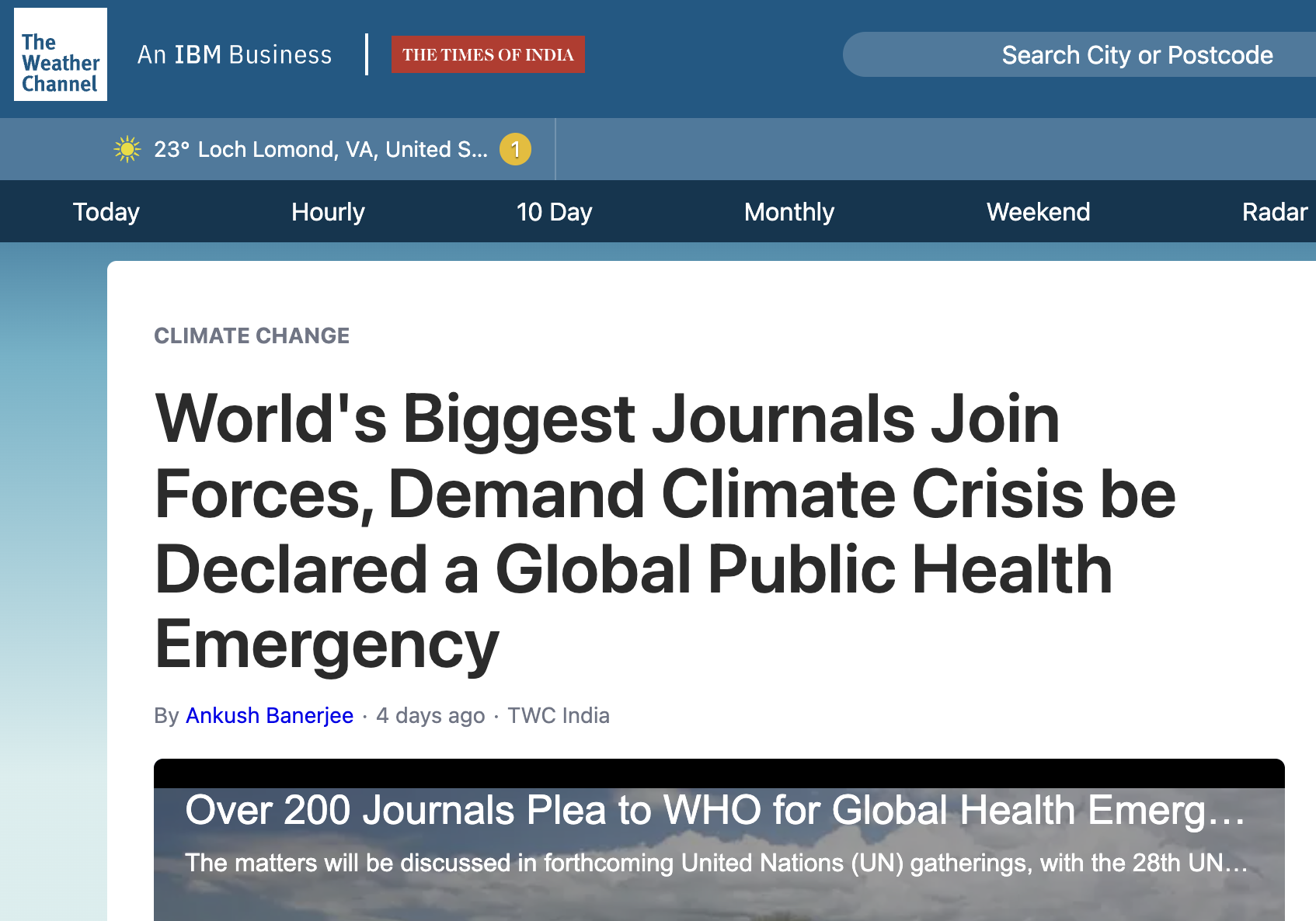
Based on their findings, the report’s authors say climate change should now be treated as a “global health emergency” and they laid out six priorities for a “health-centered response” to the warming planet.
…
“We have not really managed to tackle climate change 10 years after the Paris Agreement, and we’re seeing these escalating health harms that have made climate change now a very severe, very grave global health emergency that requires an urgent emergency response to be adequately addressed,” Romanello said.
https://www.sciencedirect.com/science/article/abs/pii/S0140988323006187
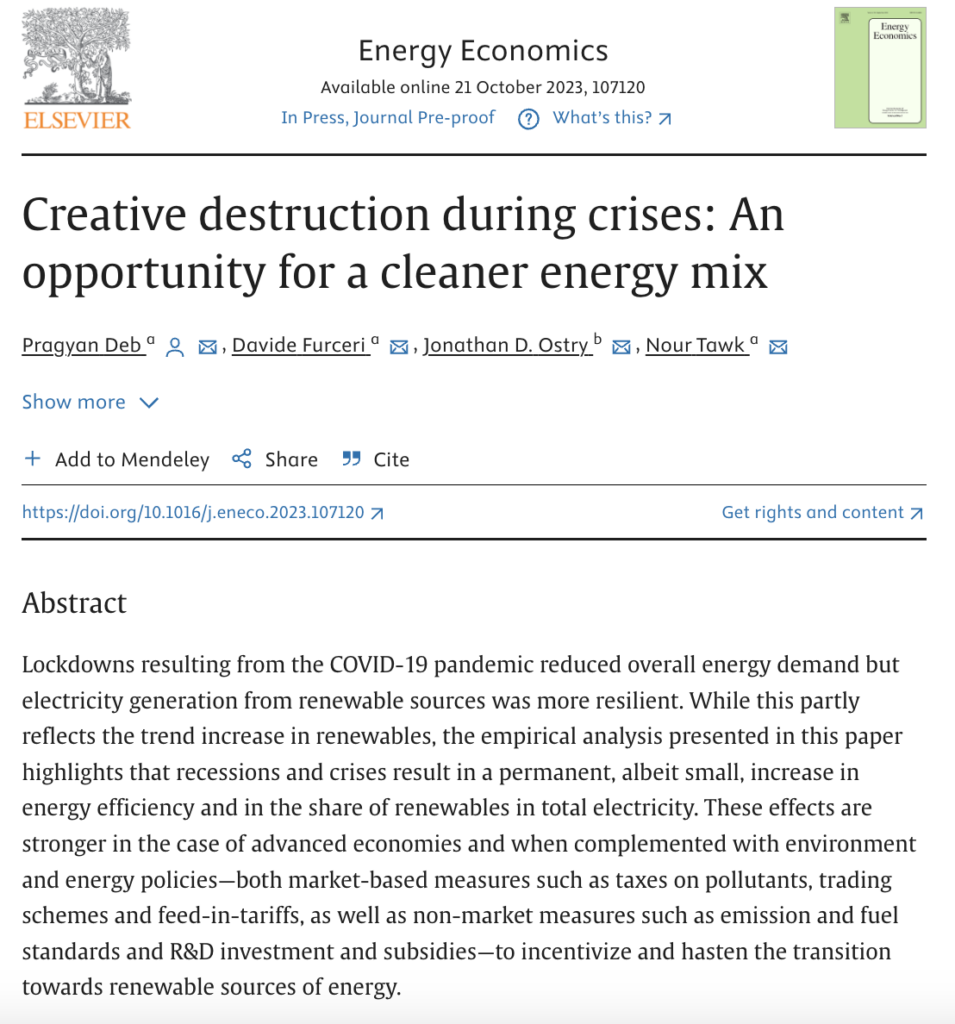
Energy Economics – Available online 21 October 2023, 107120
Excerpt: “The aim of this paper is to explore the possibility that crises provide a window of opportunity for greener energy and increase the share of renewable energy.” …
“The empirical analysis confirms that growth slowdowns, including those engendered by pandemics and financial crises, result in a permanent increase in energy efficiency and a corresponding decline in the energy intensity of output, with a disproportionate impact on dirty energy.”