https://stephenheins.substack.com/p/a-tribute-to-marc-morano-the-relentless
By Stephen Heins, The Word Merchant, Sheboygan, Wisconsin
In the long, grinding fight over energy, climate, and human progress, some people write books, some run think tanks, and some deliver careful papers at conferences. Marc Morano does something rarer and more necessary. He keeps the receipts.
Day after day, year after year, he documents the claims, the failures, the shifting goalposts, and the human costs of policies sold as planetary salvation. From his perch at Climate Depot, a project of the Committee for a Constructive Tomorrow, Morano has become one of the most effective single voices for climate realism in the English-speaking world.
Born in 1968 in Washington, D.C., and raised in McLean, Virginia, Morano earned a political science degree from George Mason University. He cut his teeth in media the hard way—reporting for Rush Limbaugh’s television show in the early 1990s, then as an investigative journalist for Cybercast News Service. He produced documentaries, chased stories, and learned how narratives are built and how they can be dismantled. That training served him well when he moved to Capitol Hill.
From 2006 to 2009, Morano served as communications director and senior advisor for Senator Jim Inhofe on the Senate Environment and Public Works Committee. There he helped compile and publicize lists of scientists who dissented from the then-prevailing catastrophic narrative—first hundreds, later more than a thousand. The reports were imperfect and controversial, as any such compilation must be.
They were also a necessary corrective at a time when the media and many institutions treated dissent as moral failure rather than scientific inquiry. Morano understood early that the real battle was not only over data but over who controlled the microphone.
In April 2009 he founded Climate Depot. The site became what he promised: a one-stop shop for climate and energy news that mainstream outlets preferred to ignore or bury. Temperature records that failed to match models, failed renewable projects, energy poverty in the developing world, the costs of Net Zero policies in Europe, the quiet expansion of coal in Asia—Morano and his team posted them relentlessly. In November 2009, when the Climate-gate emails from the University of East Anglia’s Climatic Research Unit leaked, Morano was among the first to surface and amplify the story after being contacted by the ever-vigilant Anthony Watts. The episode did not “debunk” climate science, but it exposed institutional behavior that deserved sunlight. Morano made sure the light stayed on.
He has never claimed to be a climate scientist. That fact is routinely thrown at him as a disqualifier. Yet the same critics who demand credentials from skeptics often celebrate activists and celebrities with none. Morano’s strength has always been communication and curation. He translates dense scientific and policy debates into language ordinary people can follow, and he refuses to let inconvenient facts disappear down the memory hole. A 2019 analysis in the journal Nature ranked him the number-one “climate contrarian” in media influence among hundreds of skeptics. The intended insult became a badge of effectiveness.
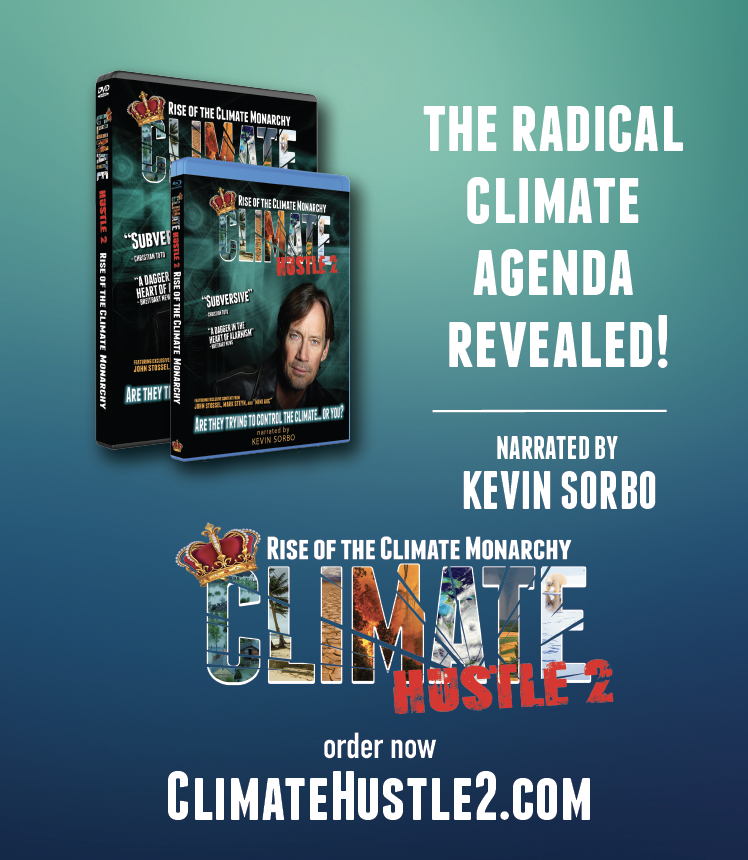
Morano took the fight to the screen as well. In 2016 he co-wrote, produced, and presented Climate Hustle, released in hundreds of theaters. The film examined the gap between apocalyptic predictions and observed reality, the political uses of fear, and the economic consequences of rushed energy transitions. Climate Hustle 2 followed in 2020. He has authored books including The Politically Incorrect Guide to Climate Change, Green Fraud: Why the Green New Deal Is Even Worse Than You Think, and The Great Reset. These works argue that the climate agenda increasingly functions less as environmental policy and more as a vehicle for expanded control, higher costs, and constrained living standards—especially for working people.
He has debated Bill Nye on national television, faced environmental leaders, and appeared across the media spectrum from Fox and Newsmax to CNN and the BBC.
He has been labeled a “climate killer,” “misinformer of the year,” and worse. Rolling Stone once included him among the planet’s top climate villains. Such attacks have not slowed him. In 2016 United Nations security forcibly removed him from the COP22 summit in Morocco. The episode illustrated how certain venues treat dissent as disruption rather than debate.
What distinguishes Morano is persistence. Climate Depot still operates daily in 2026, tracking Europe’s energy struggles under Net Zero policies, the U.S. oil and gas production boom, the practical limits of intermittent renewables, and the continuing energy needs of developing nations.
He has highlighted how aggressive climate policies can raise costs, reduce reliability, and divert attention from genuine environmental problems that technology and prosperity can solve. He has called out the human toll—higher heating and cooling bills, industrial flight, and the quiet suffering of those who cannot afford ideological purity.
From a Midwestern vantage point that values work, reliability, and results over rhetoric, Morano’s contribution is clear. Abundant, affordable energy underpins modern health, mobility, and opportunity. Policies that deliberately make energy scarce or expensive in the name of climate virtue punish the very people least able to absorb the cost. Morano has spent nearly two decades documenting that reality without apology. He does not pretend every climate claim is false. He insists that catastrophic certainty, model worship, and the suppression of dissent have produced policy failures that ordinary citizens pay for.
In an age of institutional capture and narrative enforcement, the man who keeps the archive matters. Marc Morano has kept it with energy, humor, and a stubborn refusal to look away.
Energy humanists like myself who believe that human flourishing requires honest accounting of costs and benefits owe him recognition. The record he has assembled will outlast the temporary orthodoxies it challenges.
Ultimately, temporary orthodoxies have become inhumane.