https://wattsupwiththat.com/?p=10480051&preview=1&_ppp=5c3fc26f42
By Charles Rotter
Excerpt: There is a word that does a lot of heavy lifting in American public life, and the word is “independent.” When an organization describes itself as an independent, nonpartisan, evidence-based source of scientific advice, what it is really telling you is that you are supposed to stop checking. The brand does the work. You hear “National Academies” and some part of your brain files it next to “the multiplication tables” and moves on.
I want to talk about what happens when you do check, because over the past few months a number of people have checked, and what they found is worth your time.
The organization in question is the National Academies of Sciences, Engineering, and Medicine, NASEM, which Abraham Lincoln chartered in 1863 to give the federal government independent scientific advice. It is about as established as an American scientific institution gets. It also takes in something on the order of 205 million dollars a year in federal funds. And it has had at least two separate credibility problems surface this year, one aimed at judges and one aimed at schoolchildren, which between them tell you most of what you need to know about what “independent” means now.
Let me start with the judges, because that is the cleaner story.
For more than thirty years, federal judges have relied on something called the Reference Manual on Scientific Evidence, produced by the Federal Judicial Center and, in its latest edition, developed with NASEM. The manual is the thing a judge reaches for when a case involves DNA, or epidemiology, or toxicology, and the judge needs a neutral explanation of how the science works so they can tell reliable expert testimony from junk. It has been cited in more than 1,700 opinions and handed to thousands of judges. The whole value of the thing is its neutrality. It is supposed to teach judges how to weigh science, not tell them which side to believe.
The fourth edition, the first update in fifteen years, came out at the end of December 2025 with a brand-new chapter on climate science. And the chapter, it turned out, was written by people from one side of an active fight.
The two named authors, Jessica Wentz and Radley Horton, are both affiliated with the Sabin Center for Climate Change Law at Columbia, an outfit whose stated mission is to develop legal techniques to advance climate litigation. That alone would raise an eyebrow. But the more interesting name is the one that was not on the author list. The chapter’s acknowledgments thanked Michael Burger, the Sabin Center’s executive director, who is also of counsel at Sher Edling, the law firm that has brought dozens of the climate-damage lawsuits against energy companies currently moving through the courts, including cases pending before the Supreme Court.
So we have a reference guide, handed to judges, on a scientific question at the heart of active litigation, written by advocates for one side of that litigation, with a hand from a lawyer who is actually litigating the cases. You do not have to know anything about climate science to see the problem. You only have to know what the word “neutral” means.
It gets worse, and this is the part I find genuinely remarkable. A footnote in the chapter quietly admits that the discussion of attribution science was “adapted, and in some cases excerpted” from the authors’ own prior work. That prior work is a 185-page law review article from 2020 whose lead author was Burger, the litigating attorney, and which argued that attribution science was robust enough to support climate lawsuits.
Warren Kindzierski, in an analysis for the American Enterprise Institute, ran a text comparison between the FJC chapter and that 2020 article. The overlap, in the two sections most relevant to litigation, the detection-and-attribution methods and extreme-event attribution passages, ran between 41 and 48 percent. Nearly half of the most legally important passages in a neutral judicial reference guide were lifted, word for word or lightly reworded, from a litigation-strategy article co-written by a lawyer suing energy companies.
That is not a neutral guide that leans a little. That is a litigation brief with the FJC seal on the cover.
And the climate chapter was not the end of it. Roger Pielke Jr. went through the manual in his Honest Broker newsletter and documented further problems beyond the one chapter that got pulled. A separate review by William Kindzierski and Stanley Young, published by the National Association of Scholars under the title “When Courts Rely on Unreliable Science,” found the broader manual now does something the older editions did not: it repeatedly asserts “consensus” over substantive scientific conclusions, and in several chapters fails to flag known problems with study replicability and research bias. In other words, the document that is supposed to teach judges how to spot unreliable science had, in this edition, started quietly modeling the opposite habit.
What happened next is the actual story
When this came to light, twenty-seven state attorneys general wrote to the FJC and asked them to pull the chapter, on the straightforward ground that the judiciary’s own research arm should not be predetermining contested questions in cases the judiciary is currently hearing. And the FJC, to its credit, did. On February 6, the director wrote back and said the climate chapter had been omitted from the manual and removed from their website.

Here is the part to hold onto. NASEM refused to follow suit.
The FJC, the body actually responsible for the judges, looked at the situation, saw the problem, and removed the chapter. NASEM, the body that calls itself the independent scientific conscience of the nation, kept it. The chapter is still on the National Academies website. It is still in the copies already mailed to judges. NASEM’s president wrote to the Wall Street Journal to say the Academies would not disavow it. When the institution responsible for the audience backs away from a tainted document and the institution responsible for the science digs in to defend it, you have learned which institution is captured.
I want to be fair to the authors, because they are not hiding. Wentz has said publicly that the criticism is bad-faith and aimed at suppressing climate information, that she has never been a witness or counsel in climate litigation, and that the science in the chapter is sound. Some climate scientists have rallied to defend it. Those are real positions and the people holding them may actually believe them. But none of that touches the actual objection, which was never that the science is wrong. The objection is that a document whose entire purpose is neutrality was drafted by partisans, ghost-assisted by a litigant, and half-copied from a litigation playbook. A chapter can be scientifically defensible and still be the wrong thing to hand a judge, for exactly the reasons the manual itself spends its other chapters explaining. If a forensic accountant submitted a damages report with those conflicts, it would be thrown out under the very evidentiary standards the manual teaches.
And this is not a complaint confined to the usual climate-skeptic corners. Bill Barr, who served as U.S. attorney general under two presidents, wrote in the Washington Post that the manual exists to serve a bedrock principle of the legal system, which is that judges are impartial and must receive unbiased help on technical matters, and that the climate chapter had taken a sharp turn away from it. When a former attorney general is writing op-eds in the Washington Post about the integrity of a judicial science manual, the thing has stopped being a niche dispute about climate and become a dispute about whether the institutions that certify neutrality are still neutral.
The manual, it turns out, was one piece of a larger effort. The same authors and institutions are connected to something called the Climate Judiciary Project, run by the Environmental Law Institute, which has set out to educate judges on climate science, including some judges presiding over the very climate cases the education is relevant to. Reporting on newly surfaced documents describes judges being recruited and hosted at events in places like Napa Valley, Palm Beach, and Hawaii. The House Judiciary Committee has opened an investigation into whether this amounts to an improper attempt to influence the federal bench. I do not know how that investigation will come out, and I am not going to pretend the reporting settles it. But the manual chapter and the judicial-education program are clearly branches of the same tree, and the tree is not neutral.
The schoolchildren
That is the judicial story so far. Running alongside it is a second one, which surfaced this week, and it points at the schools.
A parents’ organization called the American Parents Coalition wrote to Congress asking for an investigation into NASEM’s federal funding, after tracing some of it into K-12 curriculum material. Their letter points at a 2023 NASEM workshop on gender identity in schools, a 2024 NASEM report titled “Equity in K-12 STEM Education,” and NASEM-funded organizations producing lesson plans that frame environmental science around systemic racism and recruit students into climate advocacy campaigns. The coalition’s framing is openly political, and you can take their specific characterizations with whatever seasoning you prefer. I have not read every one of the underlying documents and I am not going to vouch for every adjective in a parents-group press release.
But step back from the adjectives and the structural point is the same as the judicial one. An organization that presents itself as the neutral arbiter of what counts as science is putting its thumb on the scale, in the same direction, in two completely different arenas at once. In the courtroom it is attribution litigation. In the classroom it is environmental justice curriculum. The throughline is that “the science,” as delivered by the independent science body, keeps arriving pre-attached to politics.
Follow the money, as usual
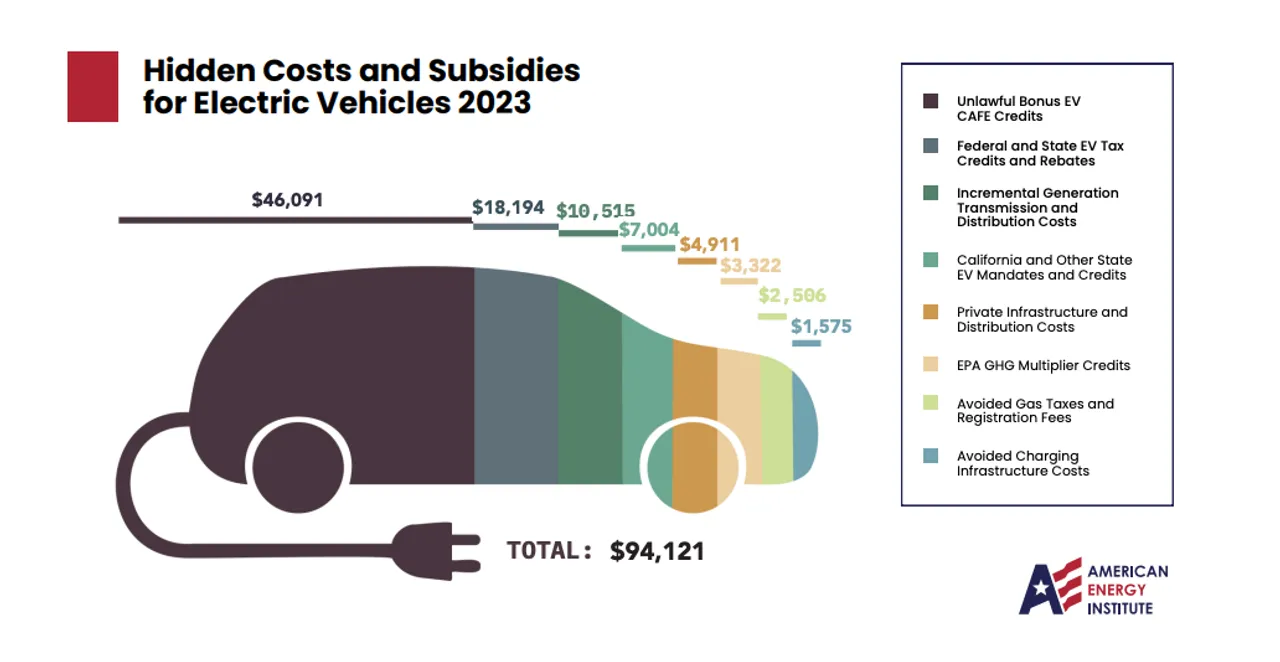
And then there is the funding, which is where these things usually end up. The American Energy Institute report that has been circulating traces several million dollars flowing to NASEM from foundations associated with the usual climate-philanthropy names. The Sabin Center, whose people wrote the judicial chapter, is itself funded by climate-litigation philanthropy. The private foundation that helped fund the manual also gives to groups that fund the lawsuits. None of this is hidden. It is all in the footnotes, for anyone who reads footnotes.