By Kevin Baxter
Staff Writer
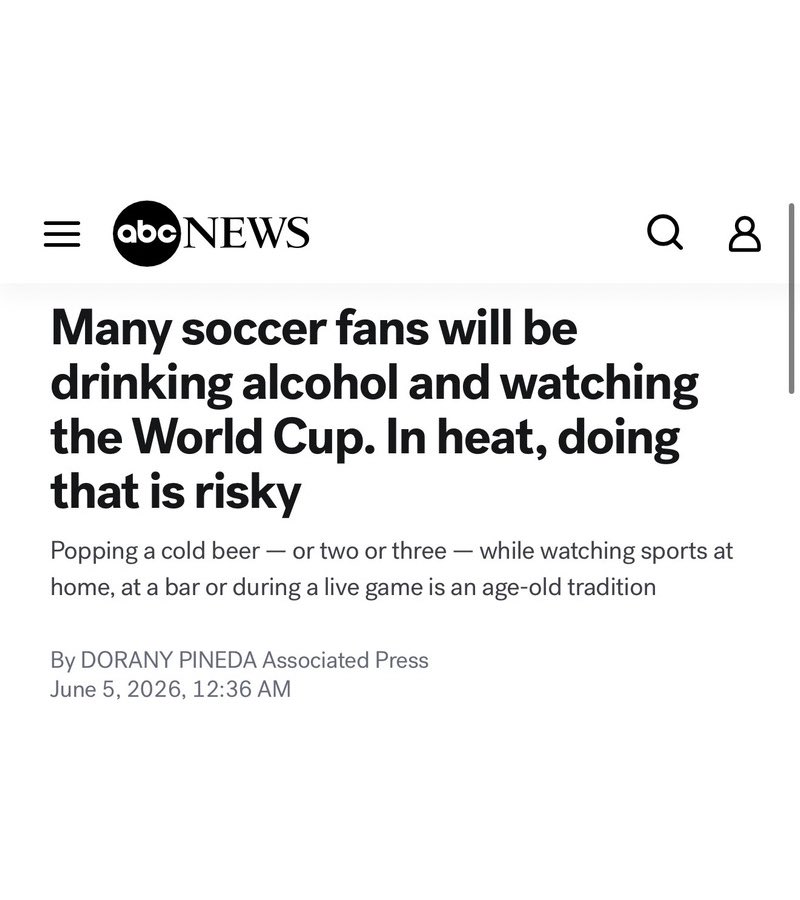
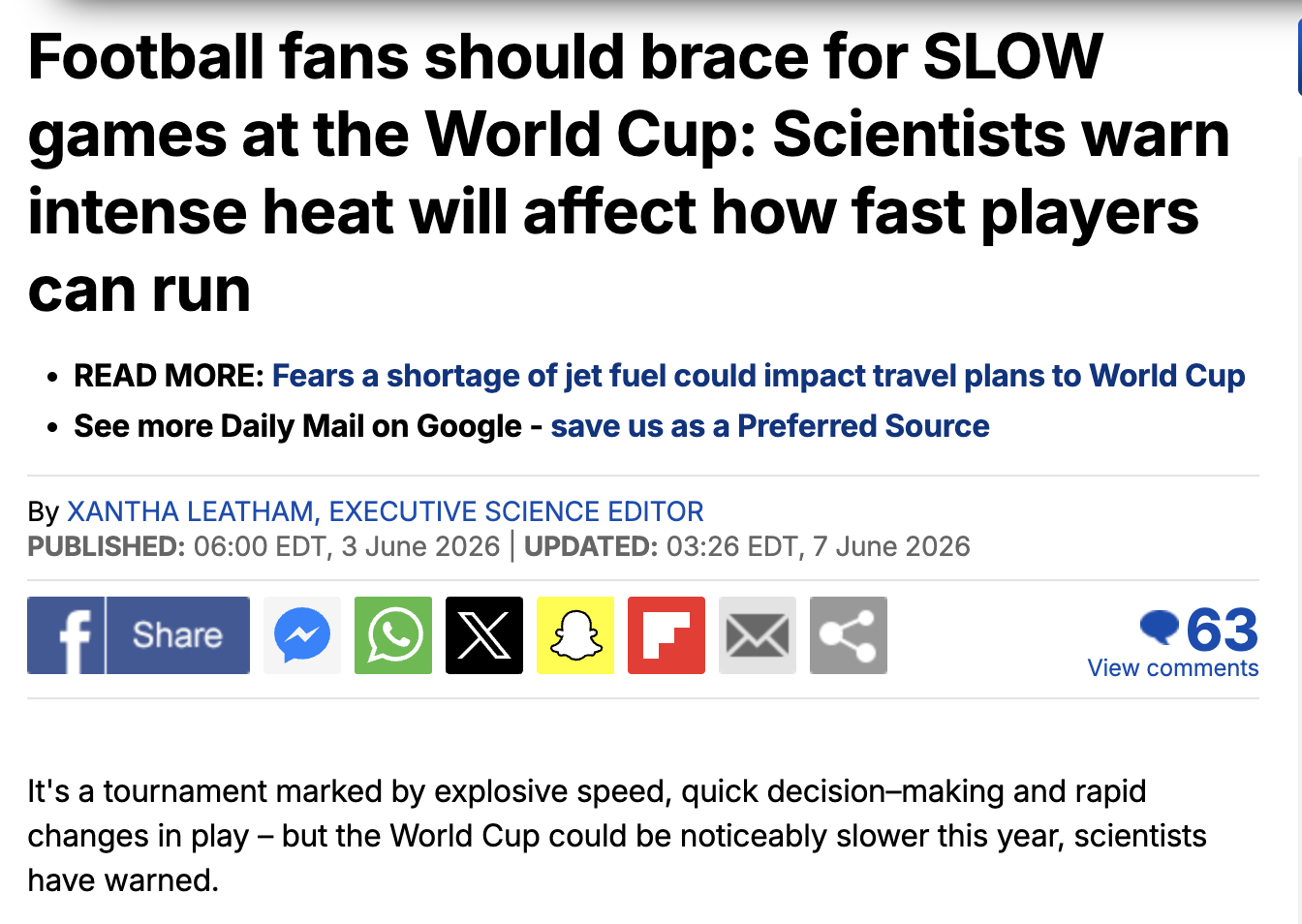
- FIFA is well aware that extreme heat and humidity could affect the 2026 World Cup, and that’s why this might be the final World Cup to be played in the summer.
- The 2025 Club World Cup exposed how extreme weather events tied to climate change have the ability to affect players on the field and fans attending games.
- Some climatologists are worried about a weather-related tragedy occurring during the World Cup.
LA Times Excerpt: A few hours after Lionel Messi and the Argentine World Cup team checked into their training base in Kansas City, a series of thunderstorms pounded the area, knocking out power, felling trees and bringing flood and tornado warnings.
Hardly ideal conditions for the world’s biggest soccer tournament. Yet that’s likely just the opening salvo of a disruptive weather system that could affect the 38-day competition, which kicks off next week with games in Mexico, Canada and the U.S.
“It’s pretty safe to say climate change is going to have a mark on this World Cup,” said Kaitlyn Trudeau, a senior research associate of climate science for Sacramento-based Climate Central. “With climate change we know it’s not just going to be hotter, but it’s also going to increase the humidity as well.”
And that could make this summer’s World Cup one of the last of its kind. Tournament soccer in June and July has been a tradition dating to the first World Cup in 1930, but since then global temperatures in June have warmed by 1.89 degrees, according to the U.S. National Oceanic and Atmospheric Administration. That may not sound like a lot, but it takes many days and nights of extreme heat to move the needle that much.
“It can be a very dangerous situation,” Trudeau said.
As a result, FIFA President Gianni Infantino has already begun discussions on moving the start of the tournament from June to March or October after 2030. In the meantime, early kickoffs, cooling breaks, air-conditioned stadiums and regular weather-related delays will necessarily become common features of the tournament, according to “Pitches in Peril,” a detailed report on the impact of climate change on global soccer, released in the run-up to the World Cup.
…
“We are basically pushing ourselves to a limit,” she said. “I’m not saying we’re going to absolutely lose the World Cup. But we are making it so much harder to find time to safely enjoy these kinds of events.
“This is not a safe environment and we should not be putting people’s lives at risk just to watch a game.”
…
As for this summer’s tournament, a 2025 study published in the International Journal of Biometeorology found that conditions in 14 of the 16 World Cup host cities are likely to exceed the extreme Wet Bulb Globe Temperature (WBGT) threshold, an advanced index used to measure how the human body experiences heat stress.
…
“We’re running out of options,” Trudeau said. “We have to understand that unless we are going to address human-caused climate change, you’re going to start losing these things that are culturally important to us or economically important.
#