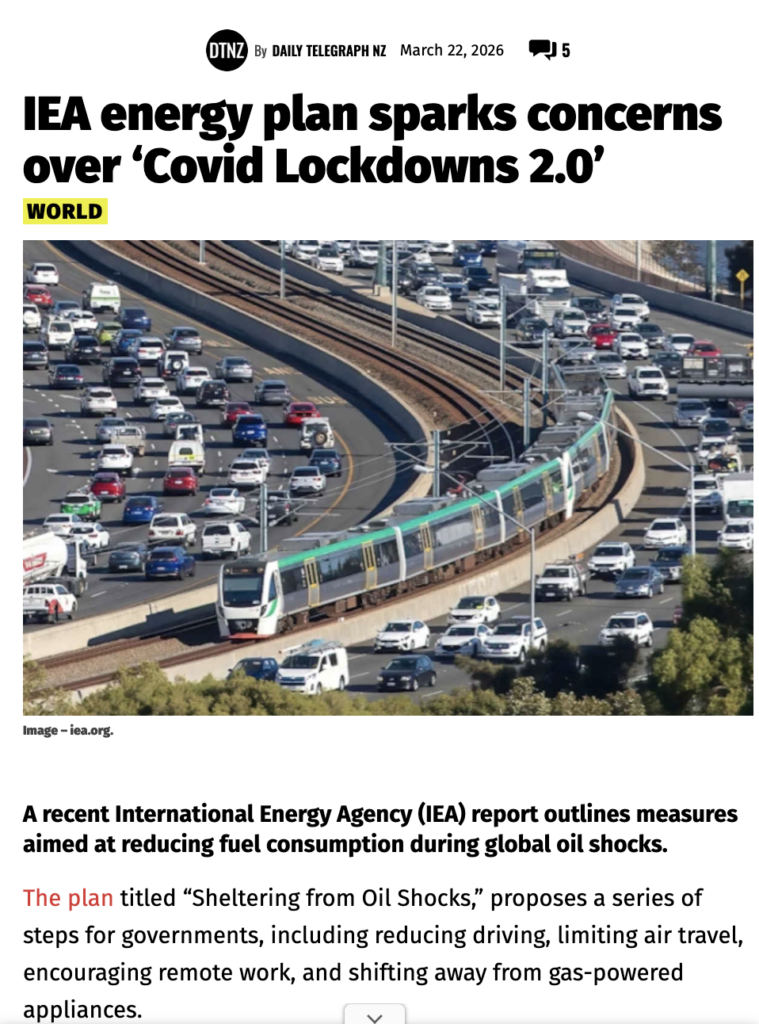
A recent International Energy Agency (IEA) report outlines measures aimed at reducing fuel consumption during global oil shocks.
By DAILY TELEGRAPH NZ
The plan titled “Sheltering from Oil Shocks,” proposes a series of steps for governments, including reducing driving, limiting air travel, encouraging remote work, and shifting away from gas-powered appliances.
Among the measures highlighted are alternating driving days based on licence plate numbers, lower speed limits on highways, and recommendations to avoid air travel where alternatives exist. The plan also encourages households to transition from gas cooking to electric appliances and promotes working from home where possible to reduce energy demand.
Critics argue the proposals could lead to increased government control over daily life, framing them as potential restrictions on movement and personal choice. They also point to similarities with behavioural and coercive measures by States adopted during the COVID-19 pandemic.
The IEA has previously emphasised that behavioural changes can play a role in managing energy demand, particularly during periods of supply disruption, though governments ultimately decide whether and how such measures are implemented.
THE IEA JUST PUBLISHED AN ENERGY LOCKDOWN PLAYBOOK (LOCKDOWNS 2.0)
The International Energy Agency released a 10-point plan telling governments to restrict driving, ground flights, force remote work, and ban gas cooking. They called it "Sheltering from Oil Shocks." Read that… pic.twitter.com/ZAYWJLgclP
— Aaron Day (@AaronRDay) March 21, 2026