By TIM DUNN
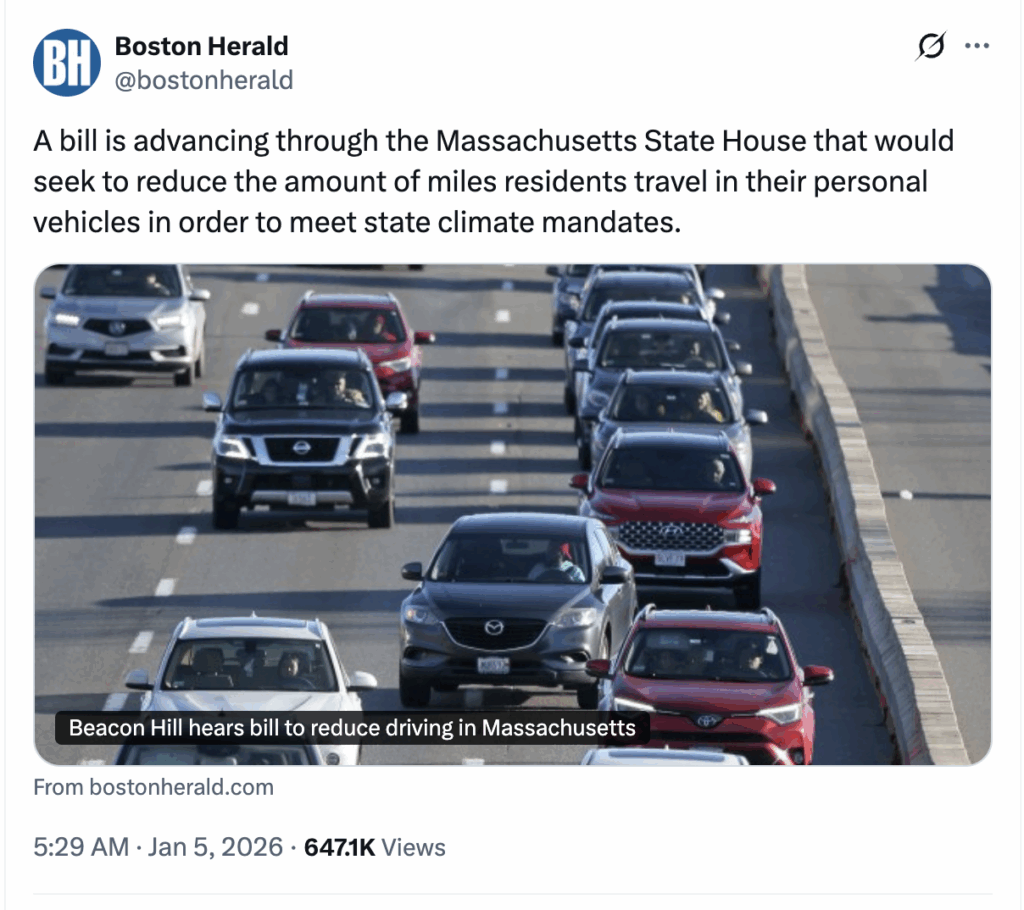
A bill is advancing through the Massachusetts State House that would seek to reduce the amount of miles residents travel in their personal vehicles in order to meet state climate mandates.
An Act Aligning the Commonwealth’s Transportation Plan with its Mandates and Goals for Reducing Emissions and Vehicle Miles Traveled (S. 2246) was filed by state Sen. Cynthia Stone-Creem (D-Norfolk & Middlesex) and is based on existing laws and regulations in Colorado and Minnesota and is meant to bring Massachusetts in line with its climate mandates.
“The bill would also require MassDOT to set goals for reducing the number of statewide driving miles, which would be considered when EEA sets greenhouse gas emissions limits and sublimits,” a summary of the legislation says.
Sponsors and supporters of the bill alike argue the legislation is needed due to the fact that the transportation sector accounts for the greatest share of emissions in Massachusetts.
“The sector is the largest source of emissions in the Commonwealth, accounting for roughly 40% of overall carbon pollution,” said Casey Bowers, of the Environmental League of Massachusetts, while testifying in support of the bill before the Joint Committee on Telecommunications, Utilities and Energy.
Kevin Shannon, an analyst with the Union of Concerned Scientists, also testified in support, saying it would “fill a necessary gap between our climate goals and plans and the transportation plans the state makes every year.” He also argues the legislation will improve public health across Massachusetts.
…
No specific figure was listed in the bill for how many driving miles per person will be reduced, but it does task the Transportation Secretary with establishing the official vehicle travel reduction goal “for the year 2030 and for every fifth year thereafter.”
It would also establish a 15-member intergovernmental coordinating council to find ways to make public transportation more accessible for residents and possibly even incentivize the use of public transit.
The bill was reported favorably by the Joint Committee on Telecommunications, Utilities and Energy in a 4–1 vote in November and has been referred to the Senate Ways and Means Committee.
…