https://www.yahoo.com/news/articles/study-links-concerning-trend-shift-005000133.html
New study links concerning trend to shift in negative moods worldwide: ‘Alters sentiment on a global scale’
By Kim LaCapria
Excerpt:
It often seems like nearly everyone on Earth has been in a worse mood in recent years.
A new study looked at whether that’s the case, and researchers pinpointed a potential reason, MIT News reported.
What’s happening?
A quick scan of headlines from the last few years revealed a lot of news about declining levels of contentment.
People are unhappy at work and in general. In 2022, Gallup published poll numbers it deemed “concerning” and noted: “Unhappiness is now at a record high.”
Looking at headlines might uncover a number of good reasons for worldwide woe, but a new study published in the journal One Earth identified one unexpected, indirect cause: rising temperatures.
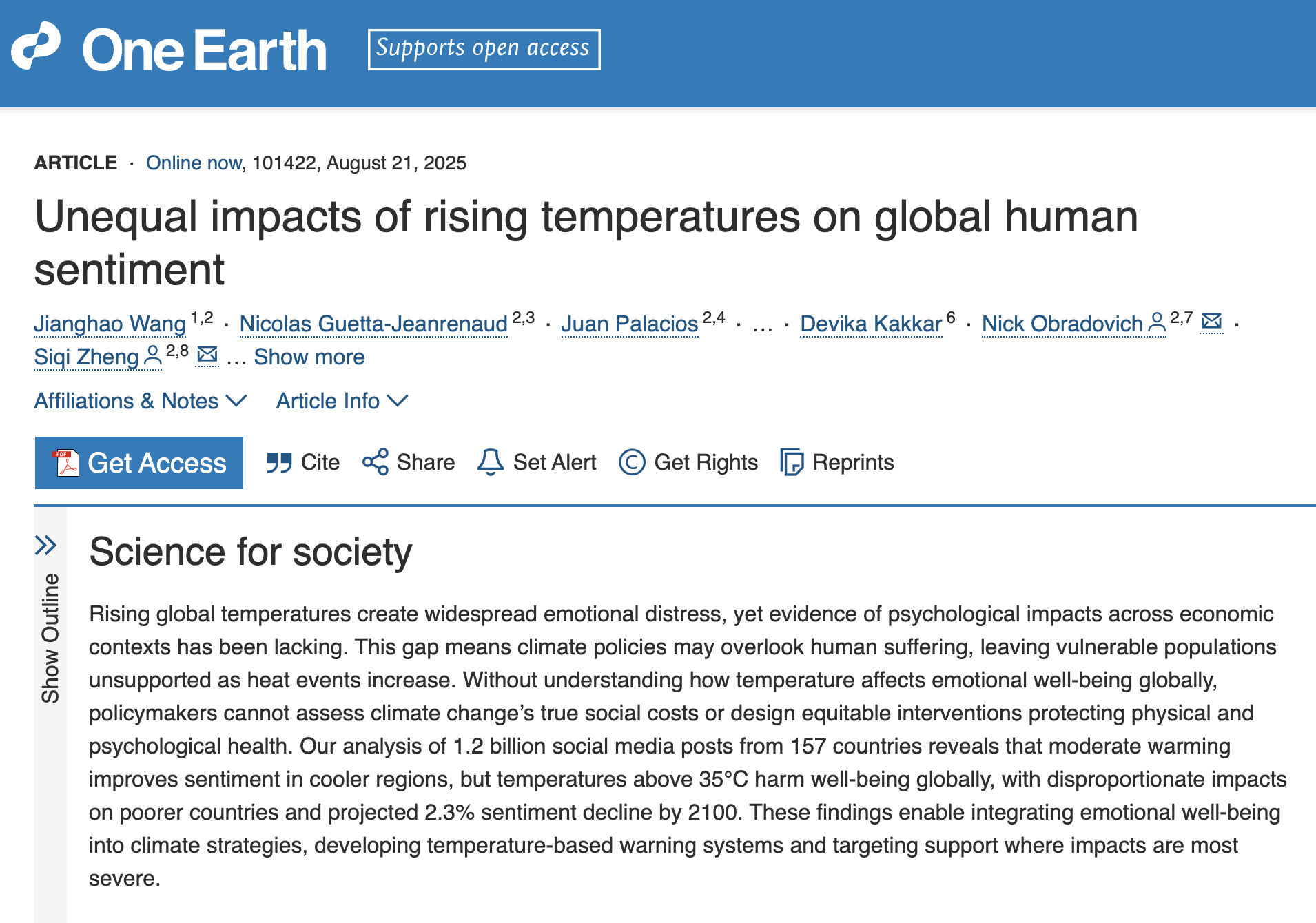
Unequal impacts of rising temperatures on global human sentiment – August 21, 2025
Science for society
Rising global temperatures create widespread emotional distress, yet evidence of psychological impacts across economic contexts has been lacking. This gap means climate policies may overlook human suffering, leaving vulnerable populations unsupported as heat events increase. Without understanding how temperature affects emotional well-being globally, policymakers cannot assess climate change’s true social costs or design equitable interventions protecting physical and psychological health. Our analysis of 1.2 billion social media posts from 157 countries reveals that moderate warming improves sentiment in cooler regions, but temperatures above 35°C harm well-being globally, with disproportionate impacts on poorer countries and projected 2.3% sentiment decline by 2100. These findings enable integrating emotional well-being into climate strategies, developing temperature-based warning systems and targeting support where impacts are most severe.…
These findings underscore the urgent need for climate policies that integrate emotional impacts and address inequalities in psychological climate vulnerability.
That may sound like common sense; every grandmother knows that uncomfortable heat makes people cranky. But this study didn’t look at anecdotes and personal observations.
Per the Massachusetts Institute of Technology, the study’s authors drew data from 1.2 billion social media posts across nearly 160 countries over the course of a year.
They determined that when temperatures exceeded 95 degrees Fahrenheit (35 degrees Celsius), social media posts in the aggregate became “about 25% more negative in lower-income countries and about 8% more negative in better-off countries.”
…
Why is this finding so important?
It’s not necessary to be a researcher or a meteorologist to see that the overheating planet, frequent bouts of extreme weather, rising sea levels, exorbitant costs of living, political inaction, and global income inequality are, academically speaking, a bummer.
…
“It’s clear now … that weather alters sentiment on a global scale,” Obradovich explained. “As weather and climates change, helping individuals become more resilient to shocks to their emotional states will be an important component of overall societal adaptation.”
What’s being done about it?
Climate mitigation and adaptation are important, but the latter protects those most at risk from the immediate impacts of the warmer world.
#

In a bad mood?
You could be suffering from ‘psychological climate vulnerability’! Science says so!
New study finds ‘rising global temps create widespread emotional distress’ –
Calls for ‘urgent need for climate policies that integrate emotional impacts’ & reduce… pic.twitter.com/N5jSbKs2hB
— Marc Morano (@ClimateDepot) September 2, 2025