
Extreme weather expert Dr. Roger Pielke Jr. on The Texas Flash Floods: ‘A tragedy that should never happen again’ – ‘Occurred in a location that has among the greatest risks in the nation of flash flooding’
By Roger Pielke Jr.: Hoyt and Langbein 1940 identified south central Texas as being among the regions of the United States with the greatest risk of flooding.
The flooding was certainly extreme but it should not have been historically unexpected. The documented record of extreme flooding in “flash flood alley” goes back several centuries, with paleoclimatology records extending that record thousands of years into the past.
Consider the figure above, from a classic 1940 historical text on U.S. floods, which shows that the same region of Texas that experienced this week’s floods has long been known to be a bullseye for flash flooding. In fact, almost a century before Hoyt and Langbein, Texas experienced one of the greatest losses of life in U.S. history related to extreme weather. …
The data show considerable variation across the U.S. but also no indication of an increase in this metric for “flash flood alley” over this 42-year analysis. …
The IPCC AR6 WG1 concluded the following on U.S. river floods:
There is limited evidence and low agreement on observed climate change influences for river floods in North America (Section 11.5). Trends in streamflow indices are mixed and difficult to separate from river engineering influences, with large changes but little spatial coherence across the USA, making it difficult to identify trends with confidence . . .
…
Based on the peer-reviewed literature and observational records, there is little empirical basis to claim that extreme precipitation has increased in “flash flood alley” (or indeed, most of North America or the world). Similarly, there is little basis for claims that flooding has become more common or severe. …
The figure above shows that as the population of Texas increased from ~9.2 million in 1958 to ~28.6 million in 2018, overall flood deaths remained fairly constant, meaning that the fatality rate dropped by about two-thirds.
This tragedy occurred in a location that has among the greatest risks in the nation of flash flooding, where kids in summer camps have previously been swept away to their deaths, and where warning systems are (apparently and incredibly) not in place. This tragedy never should have happened and it should never happen again. …
If there was ever an issue where politicians should come together to take action to ensure that this type of tragedy never happens again — This is it.
Texas Flood Tragedy: A Call for Truth & Action, Not Political Exploitation – ‘Not hijacked to push climate change or budgetary blame games’
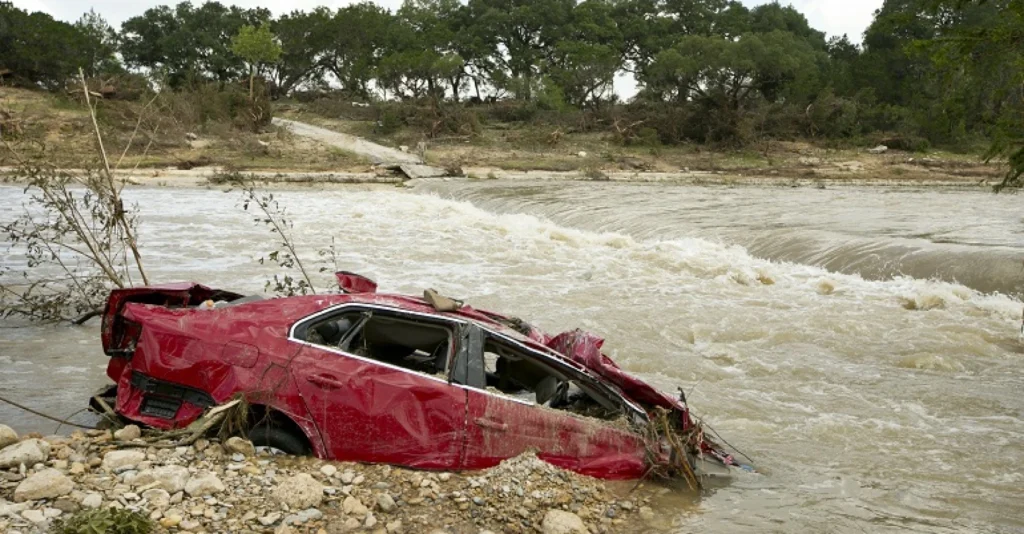
Dr. Matthew Wielicki: Historically, central Texas is recognized as one of the most flood-prone areas in the United States. Flood events have occurred with devastating frequency and intensity for decades. …
Detailed examination of reports from the EPA and NOAA provides a critical counterpoint to simplistic climate narratives often pushed by the media and politicians. EPA documentation confirms that while the frequency of intense rainfall events has slightly risen, overall water availability and river flow in Texas have actually declined due to increased evaporation rates, changing vegetation, and altered land-use practices. …
Additionally, NOAA and Texas A&M climate data explicitly contradict claims that extreme rainfall frequency and flooding are unprecedented or primarily climate-driven. …
Despite clear data from authoritative sources, politicians and certain climate scientists quickly leveraged the tragedy to blame recent federal budget cuts to agencies like NOAA and the National Weather Service.