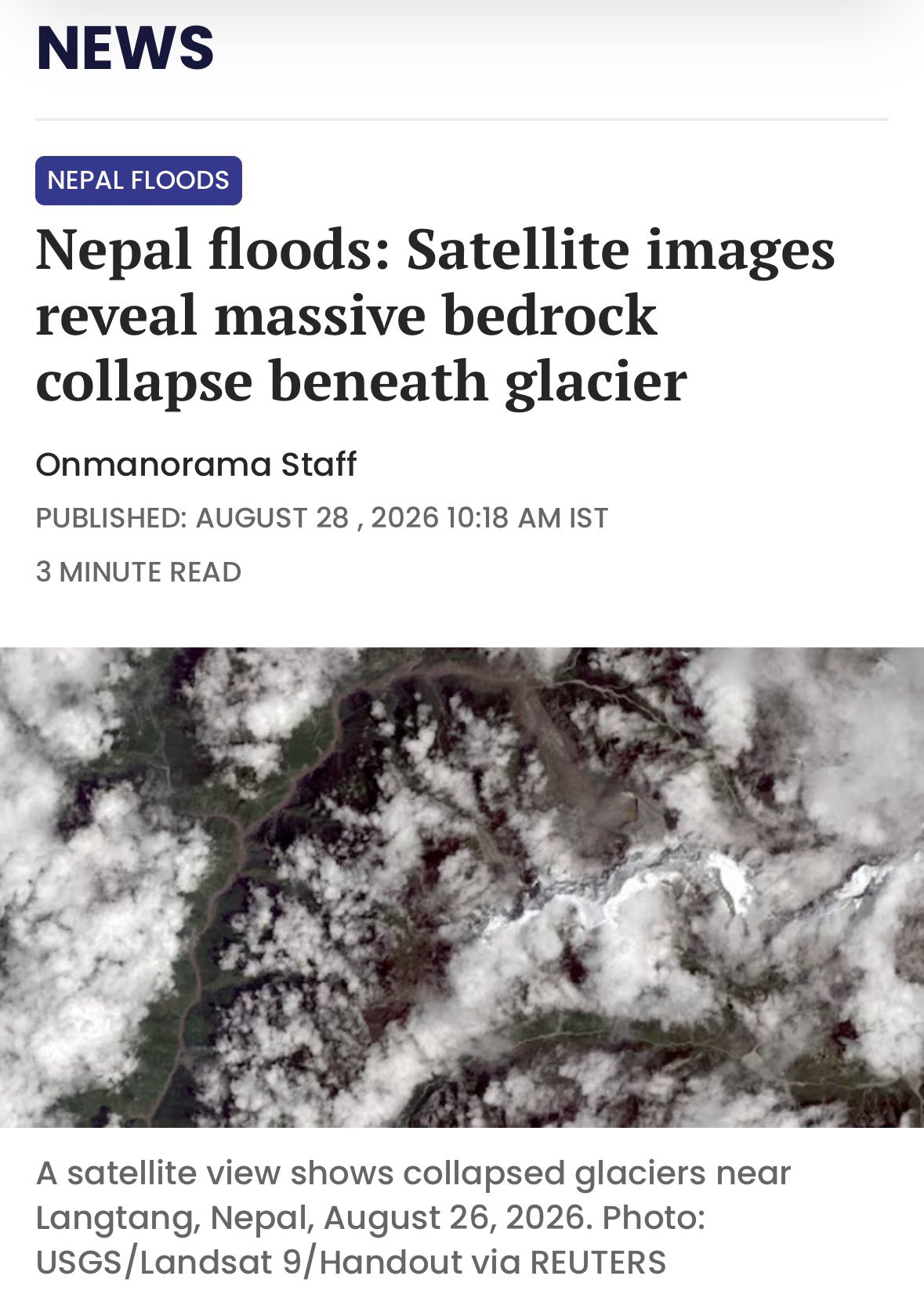
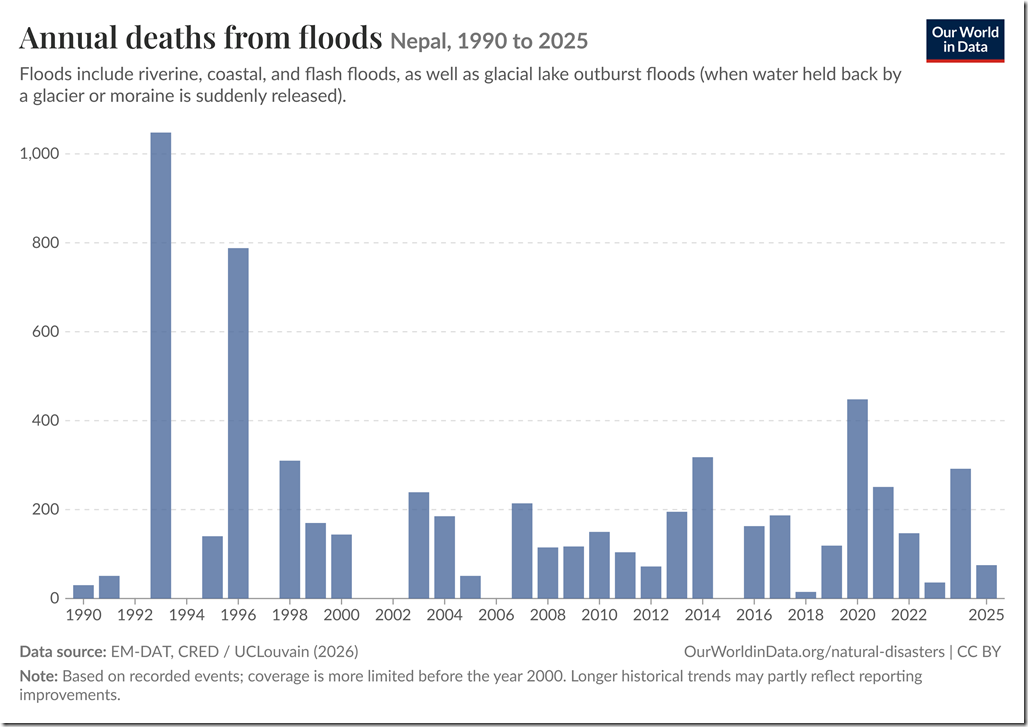
Well, it turns out that the avalanche in Nepal was triggered by the collapse of bedrock beneath the Yala Glacier, not the glacier collapsing itself.
This totally obliterates climate alarmists’ narratives.
️ “ … pic.twitter.com/EOkF7JXDJN
— Chris Martz (@ChrisMartzWX) August 31, 2026
By Onmanorama Staff
Excerpt: New satellite imagery has revealed that the devastating floods in Nepal were triggered not only by a glacier collapse but also by a massive failure of the bedrock beneath it, according to a report by The Week.
Geomorphologists Kristen Cook and Dan Shugar said further analysis of satellite images showed that a large section of the mountainside had collapsed along with part of the glacier.
“There was a big bedrock failure that took part of the glacier with it,” Shugar, an associate professor at the University of Calgary, said. The glacier broke off in a north-west direction before falling westward into the river channel.
….
Initial satellite images taken on Wednesday were obscured by clouds and debris, making it possible to determine only that a section of the glacier had broken away from Langtang Lirung peak, near Nepal’s border with Tibet. Images taken the following day provided a clearer picture, showing that the bedrock beneath the glacier had also collapsed.
“It looked like there was not only this glacier that had failed, but a much larger chunk of the bedrock of the mountainside itself that had given way,” Shugar said.
Cook, a geomorphologist at Université Grenoble Alpes in France, said the resulting debris buried villages as it slammed into the valley floor. The steep and narrow terrain allowed the debris to maintain its momentum, while melting ice added to the flow of water and mud.
…
What caused the floods?
Scientists had initially pointed to a glacier burst caused by rapid ice melt as a major factor behind the disaster. The US Geological Survey (USGS), which initially faced reports linking the event to an earthquake, later clarified that it was caused by the “break-off of a glacier”.
The International Centre for Integrated Mountain Development (ICIMOD) also suggested that the event was probably an avalanche involving a mixture of ice and rock. A large mass of ice and rock debris reportedly fell into the Lendi Khola, a tributary of the Bhotekoshi River, causing a sudden surge that carried silt and large boulders downstream.
#
For all the usual suspects whining that “climate change” caused the flood in Tibet, it turns out that it was caused by a collapse of the bedrock, not by melting glaciers.
Ooops …
— Willis Eschenbach (@WEschenbach) August 30, 2026
#
Related:
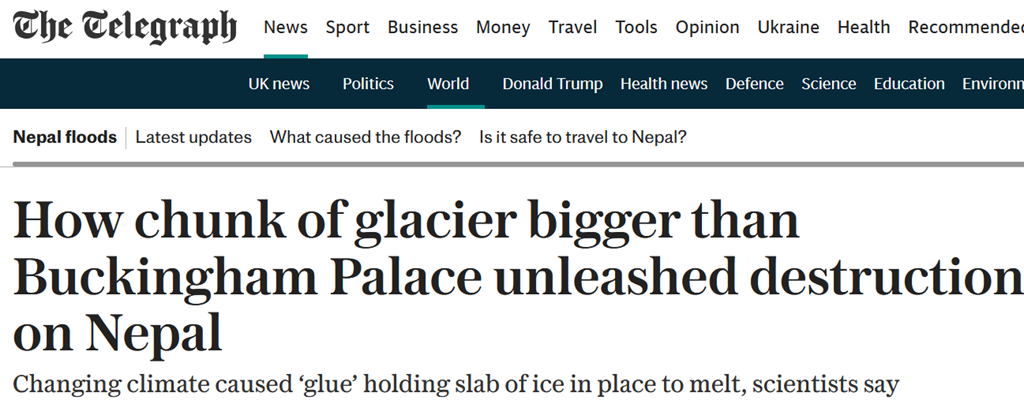
And that headline? Turns out that these anonymous scientists said nothing of the sort…
As Simon Cook, the geo-scientist, points out, there also appears to be a sharp break in the bedrock, where the glacier broke. This indicates a geological collapse, rather than a glacial one.
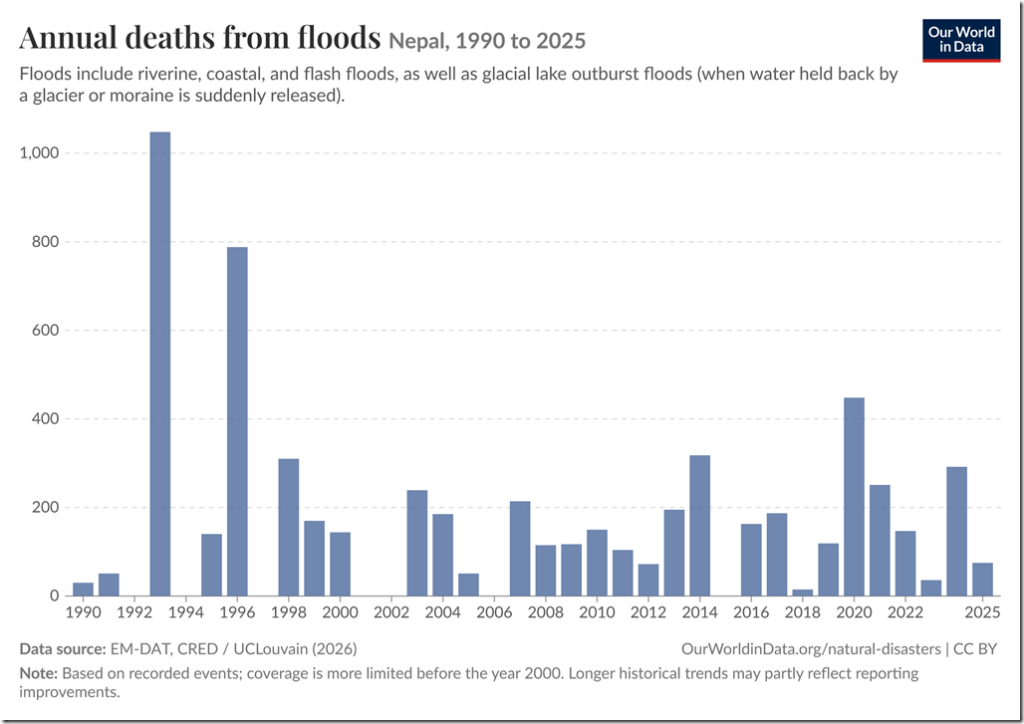
Scientist: ‘How Grifters Twist Nepal’s Natural Glacier Avalanche to Blame Fossil Fuels’
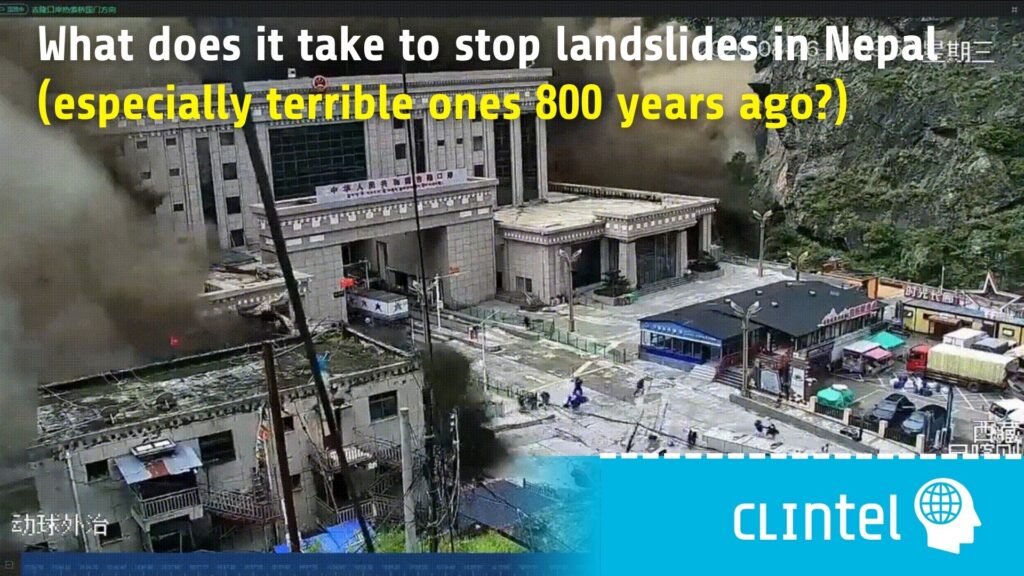
NYT knows what caused the Nepal disaster pic.twitter.com/LJoVAPTgQ6
— The Honest Broker (@RogerPielkeJr) August 29, 2026