#
ICJ opinion could influence global climate litigation
U.N. treaties should guide responsibilities, rich countries say
South, small island states seek firm measures to curb emissions
THE HAGUE, July 23 (Reuters) – The United Nations’ highest court on Wednesday told wealthy countries they must comply with their international commitments to curb pollution or risk having to pay compensation to nations hard hit by climate change.
In an opinion hailed by small island states and environmental groups as a legal stepping stone to make big polluters accountable, the International Court of Justice said countries must address the “urgent and existential threat” of climate change.
“States must cooperate to achieve concrete emission reduction targets,” Judge Yuji Iwasawa said, adding that failure by countries to comply with the “stringent obligations” placed on them by climate treaties was a breach of international law.
The court said countries were also responsible for the actions of companies under their jurisdiction or control.
Failure to rein in fossil fuel production and subsidies could result in “full reparations to injured states in the form of restitution, compensation and satisfaction provided that the general conditions of the law of state responsibility are met.”
“I didn’t expect it to be this good,” Vanuatu’s Climate Minister Ralph Regenvanu told reporters after the unanimous opinion by the ICJ, also known as the World Court, was read out.
Vishal Prasad, one of the law students that lobbied the government of Vanuatu in the South Pacific Ocean to bring the case to the ICJ, said: “This advisory opinion is a tool for climate justice. And boy, has the ICJ given us a strong tool to carry on the fight for climate justice.”
U.N. Secretary-General Antonio Guterres hailed the opinion and said it affirms that the Paris climate agreement goal needs to be the basis of all climate policies.
“This is a victory for our planet, for climate justice, and for the power of young people to make a difference,” he said. “The world must respond.”
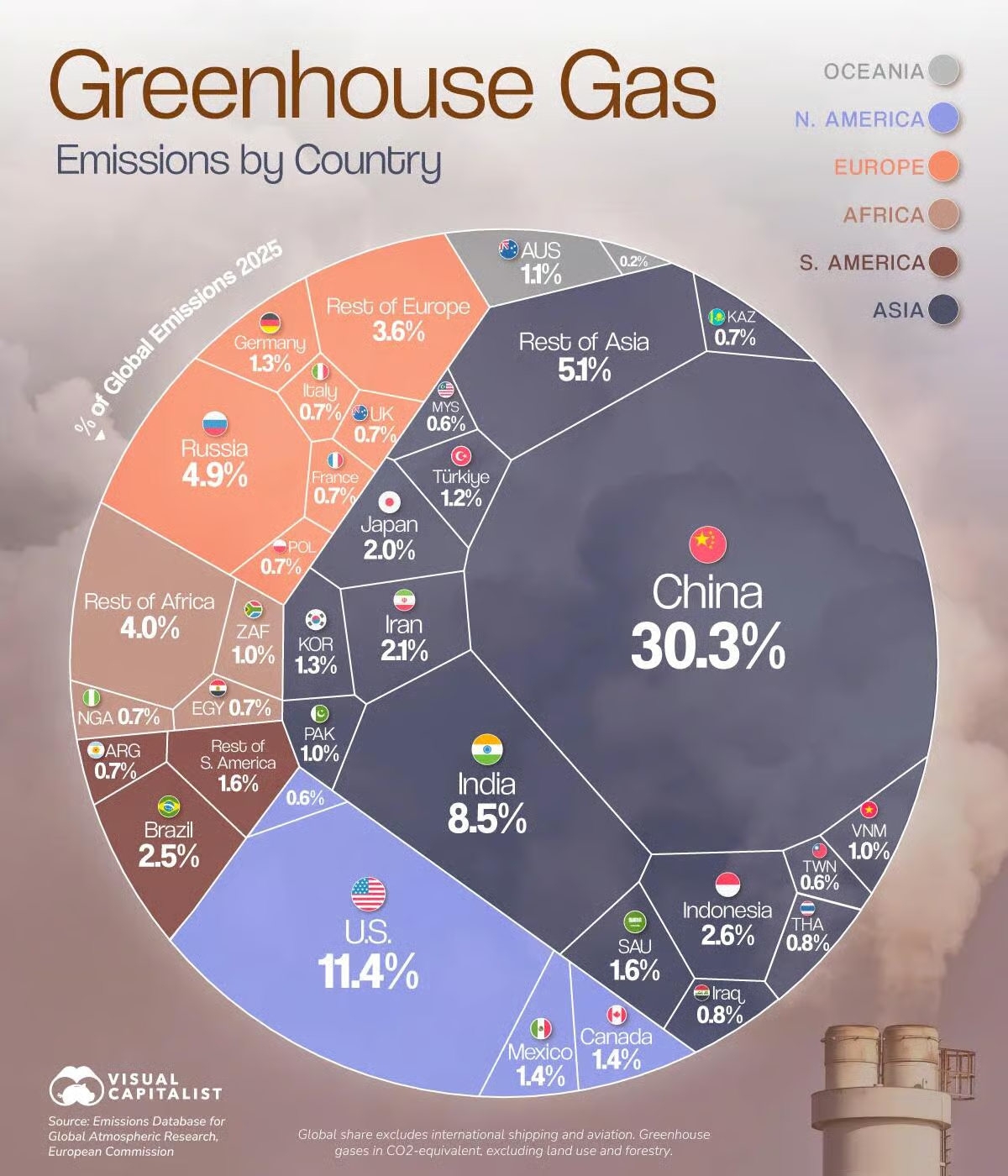
While the decision was stronger than most expected, its impact may be limited by the fact that the United States, the world’s biggest historical greenhouse gas emitter, and second biggest current emitter behind China, has moved under President Donald Trump to undo all climate regulations.
“As always, President Trump and the entire administration is committed to putting America first and prioritizing the interests of everyday Americans,” White House spokeswoman Taylor Rogers told Reuters in response to the opinion.
With scepticism over climate change spreading in the U.S. and elsewhere, Judge Iwasawa laid out the cause of the problem and the need for a collective response in his two-hour reading of the court’s opinion.
…
#
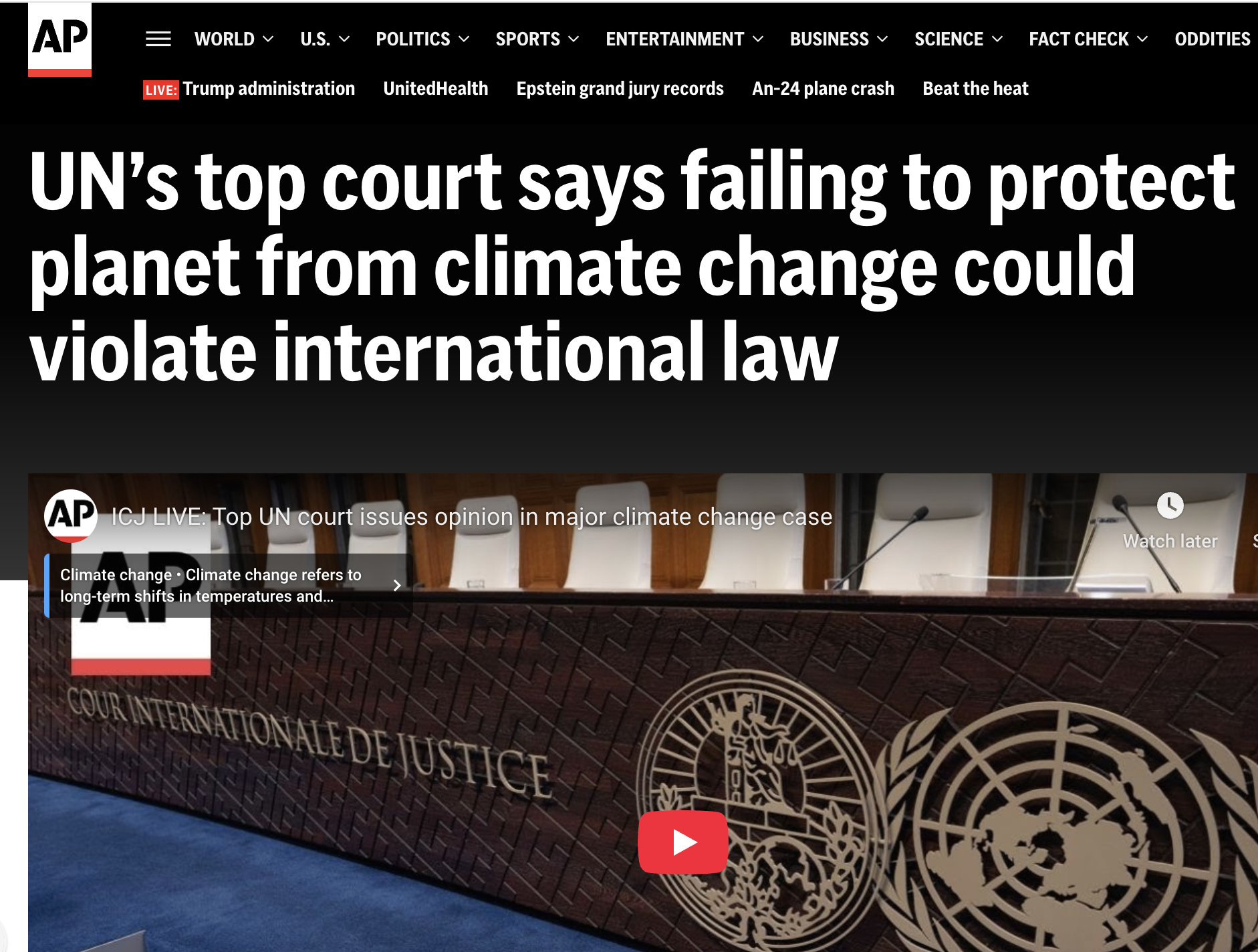
The International Court of Justice has ruled that climate change is an existential universal risk to all nations, is caused by human activities & that UN states have a “duty” to prevent it
It paves the way for forcing countries to take “climate refugees” pic.twitter.com/De35MBzadR
— Visegrád 24 (@visegrad24) July 24, 2025